
Gallery
Exteriors
Siding, doors, trim and decks. On this coast the preparation is the job and the painting is the short part at the end.
Drag it
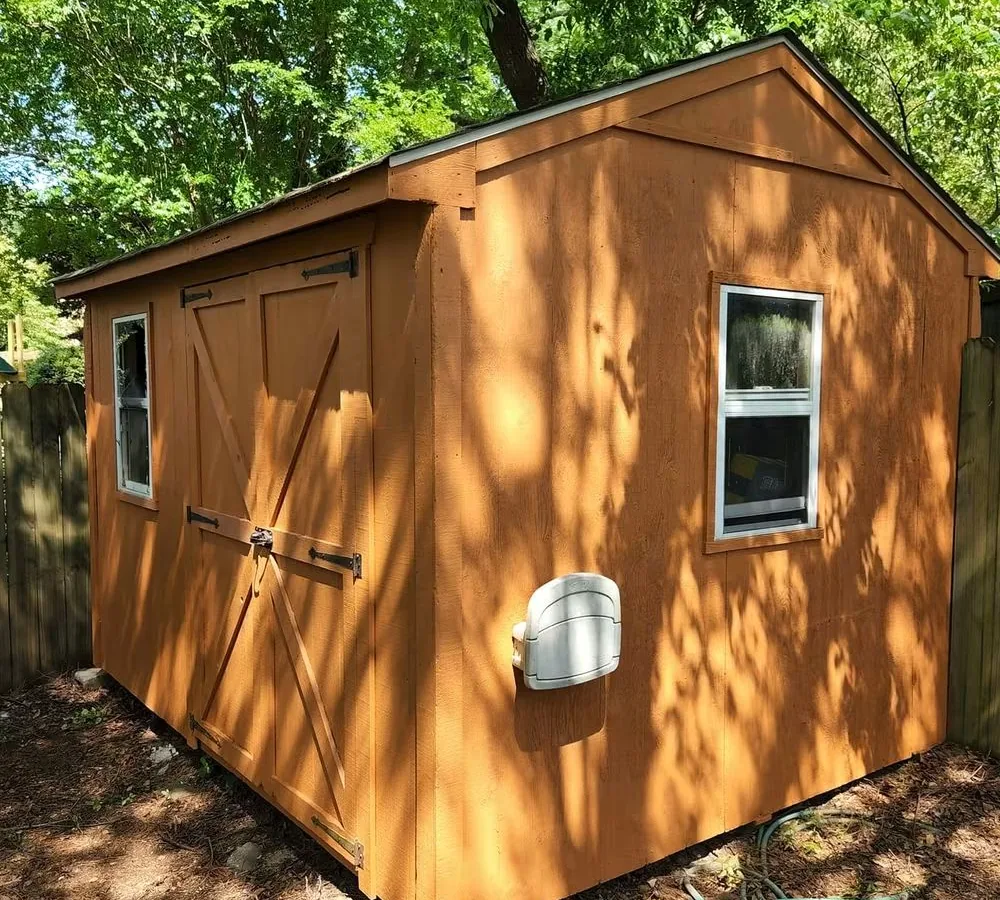
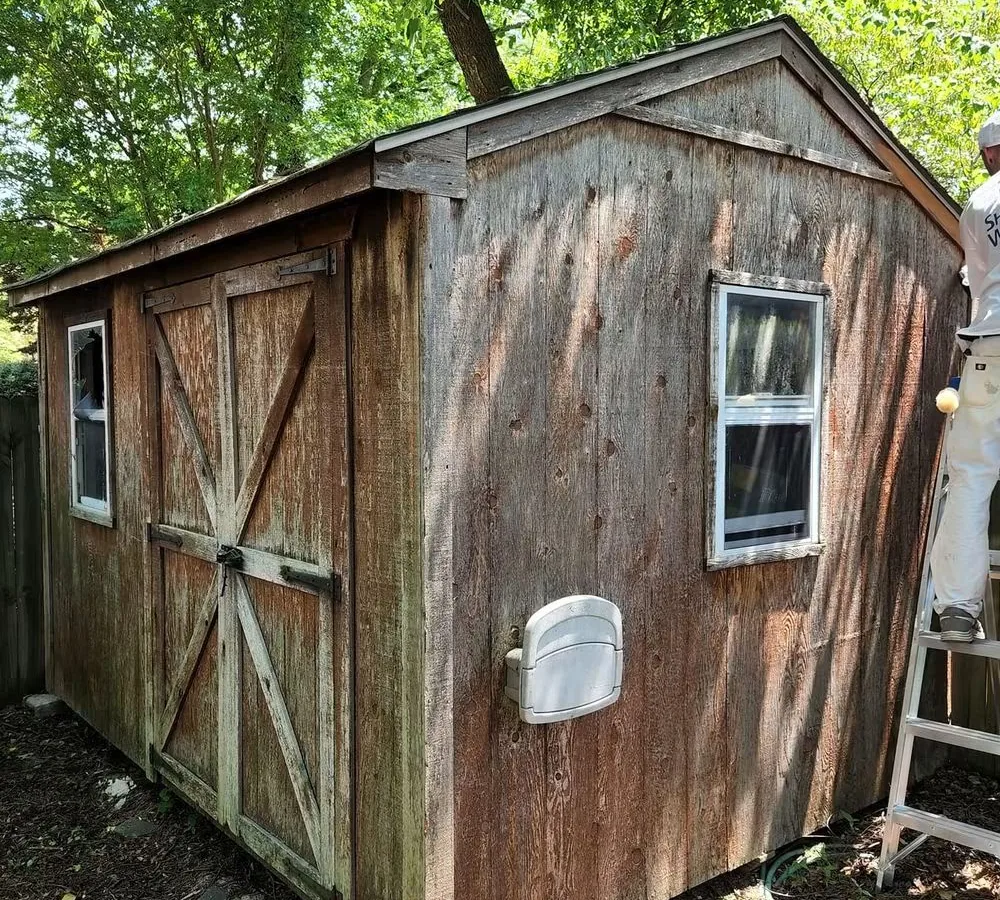
The wood was still good.
Gray, blotched, and failing in patches where the old finish had let go. None of that is a reason to replace siding. It is a reason to wash it, take the loose finish back to something sound, and feather the edge so you cannot see where the scraper stopped.
The boards, the barn doors, the hinges, the windows and the light are the ones that were already there.
 BeforeAfter
Front doors
The one exterior surface everybody touches
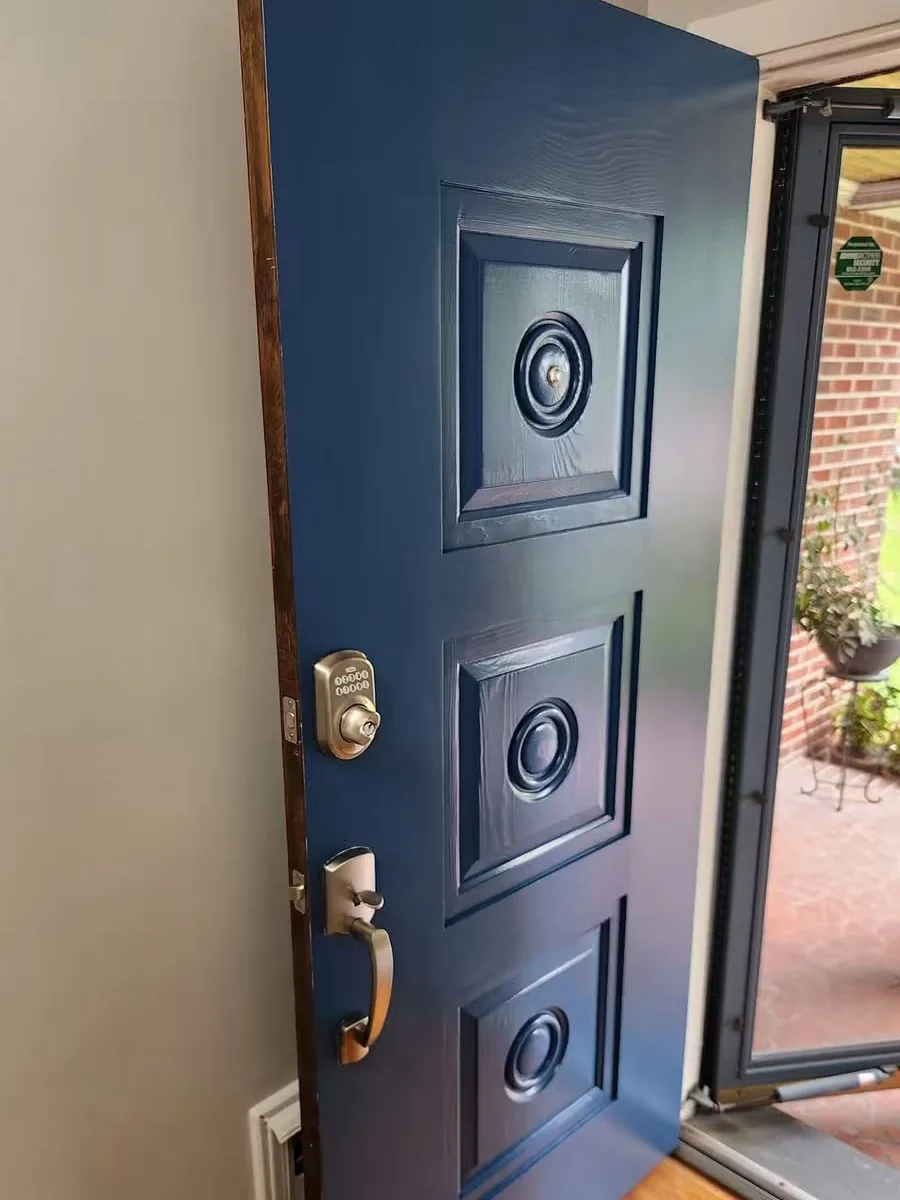
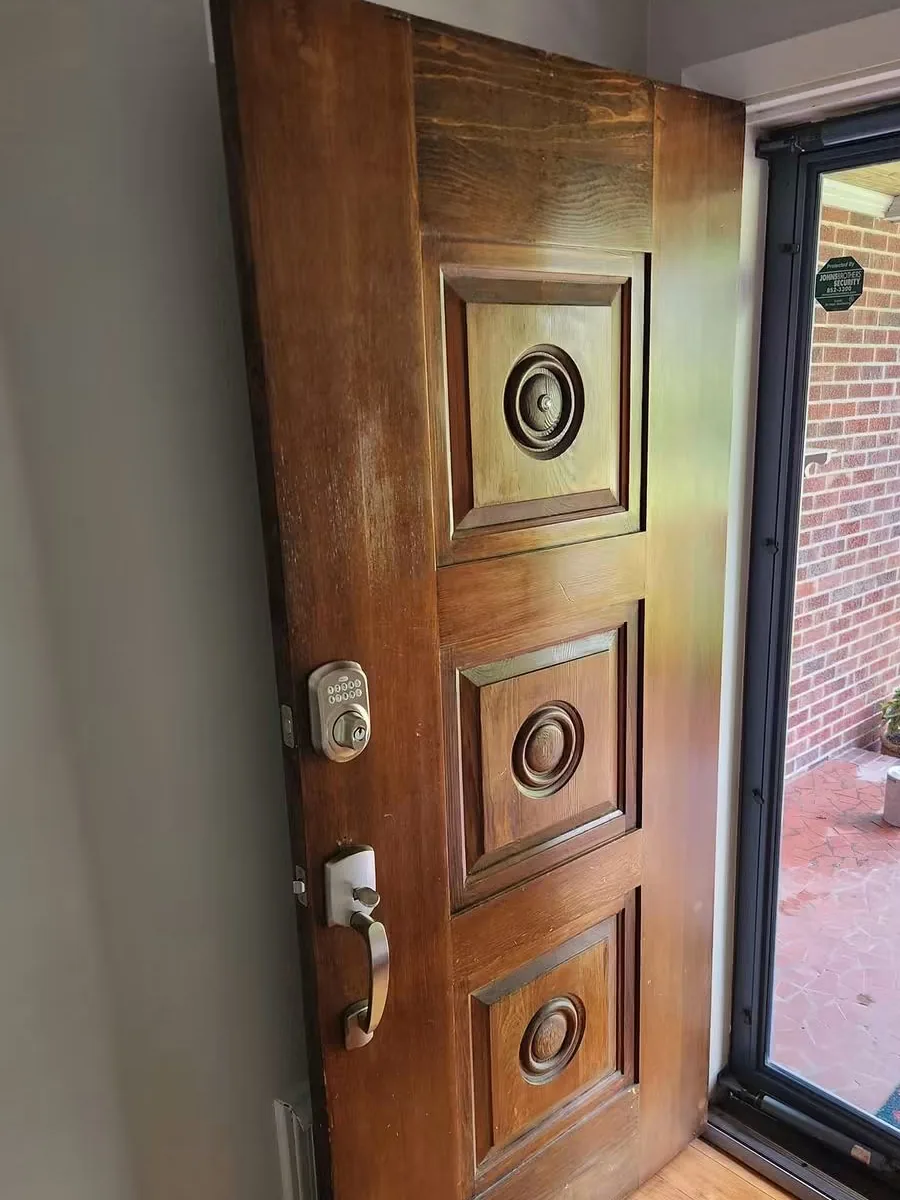
A front door is a small job with a hard brief. It faces the weather, it gets handled every day, and it is the one surface on the house a visitor sees from two feet away. So it comes off its hinges, the hardware comes off with it, and it goes back on with the same medallions and the same handleset.
Drag the slider. The brass is the original brass.
 BeforeAfter
Before and after
What a door looks like halfway through
Brown, with the two upper panels spot-primed and the handleset taped off. A trestle in the opening, paper down over the floor, and the door still hanging where it will be painted. That is the state a front door is in for most of the day it takes.
It went back into the same opening on the same hinges. What changed is the color, and the fact that the finish on it is sound again.
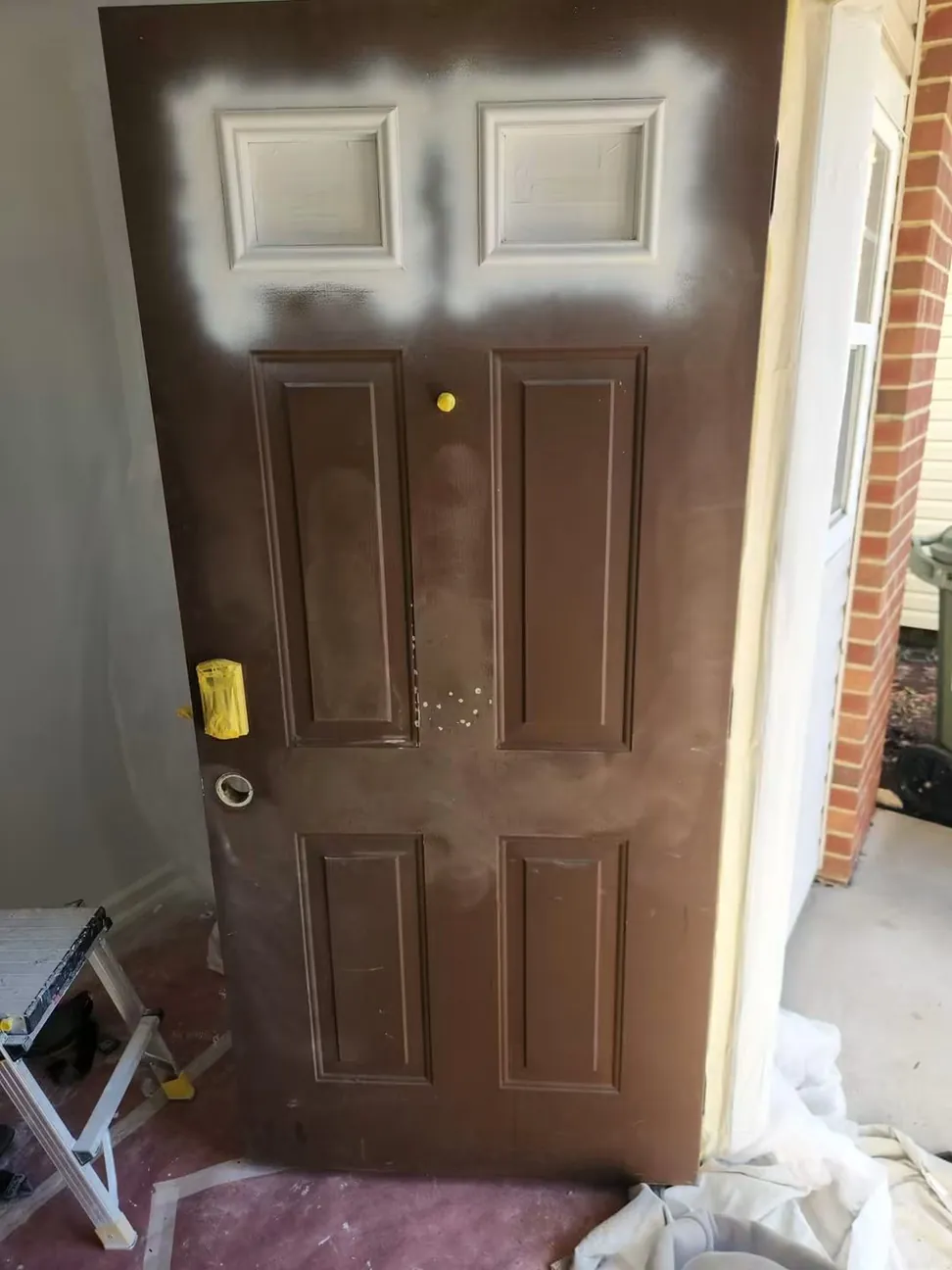 Before
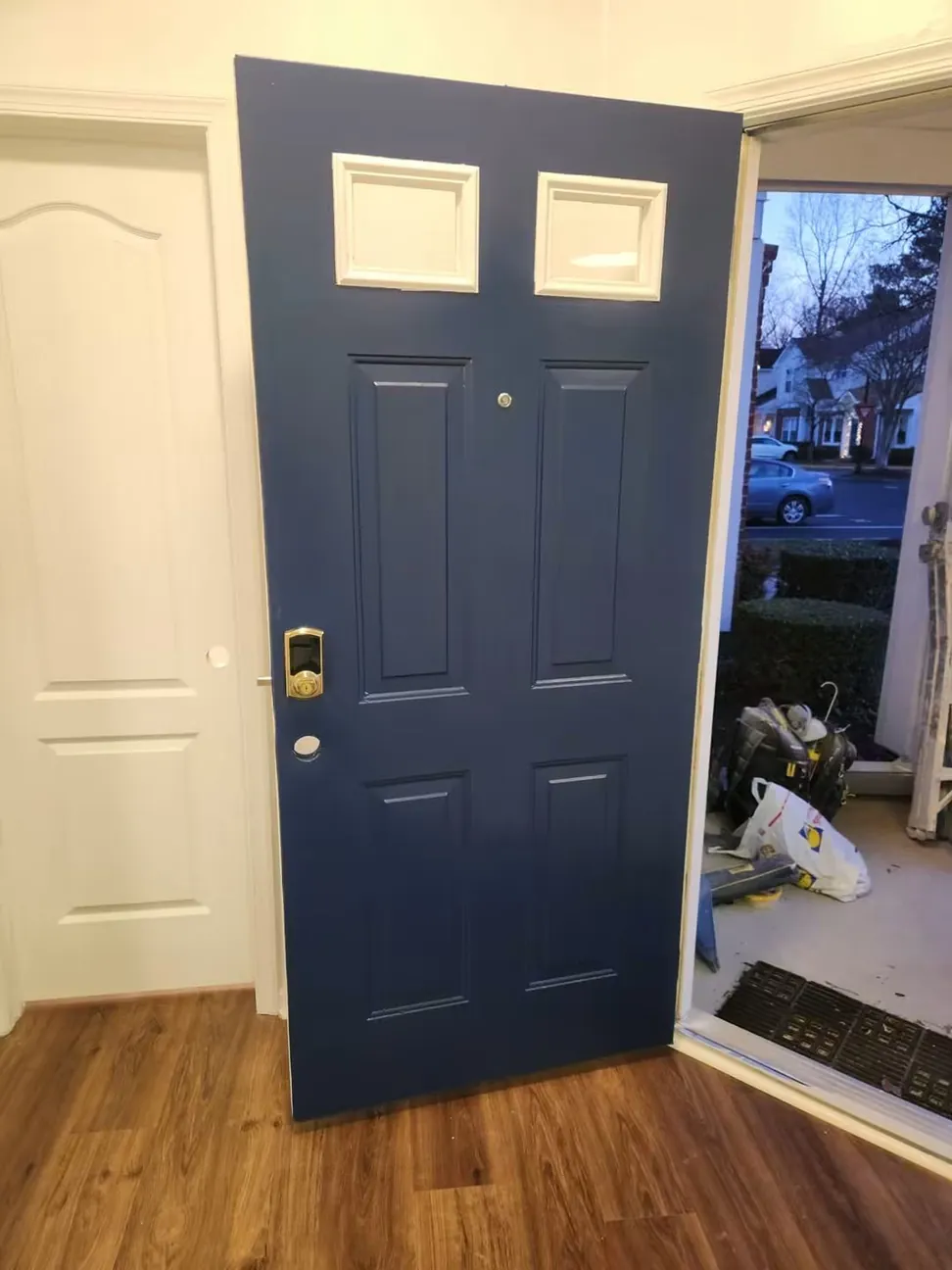 After
AfterRecent exterior work
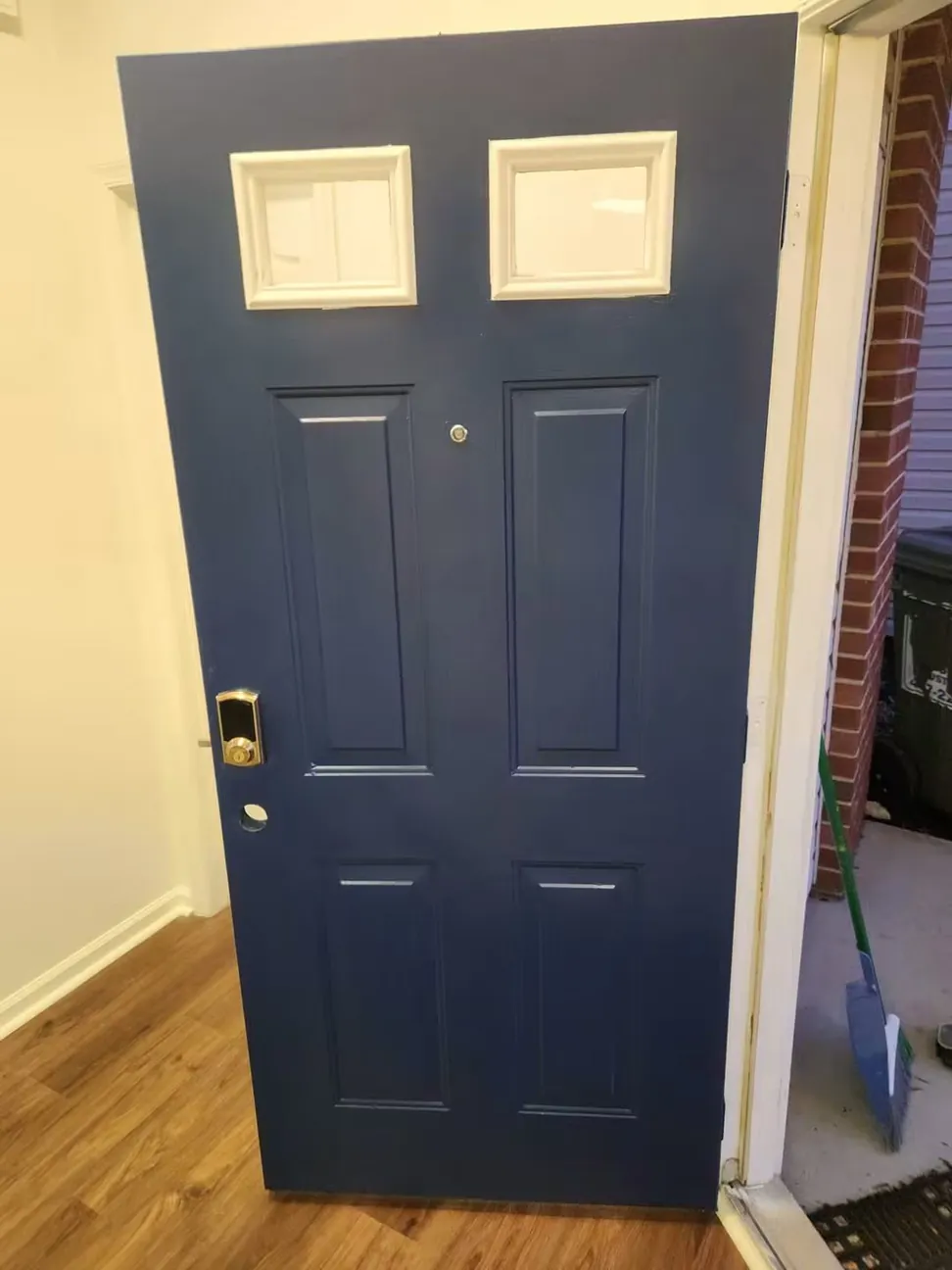
Front entry door finished in deep navy with the cream glazing bars and brick surround left as they were
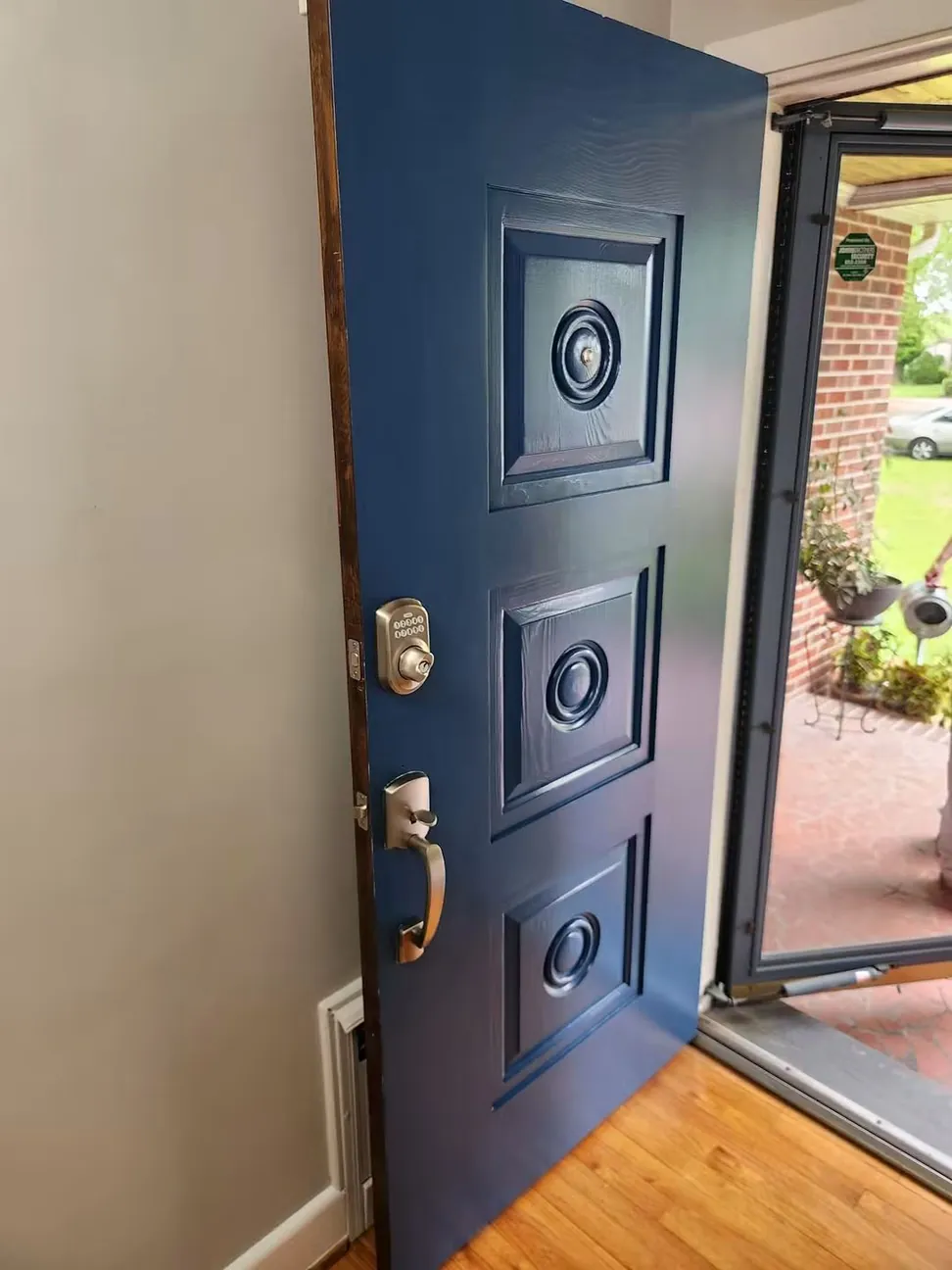
Raised-panel front door finished navy, the original brass medallions and handleset refitted
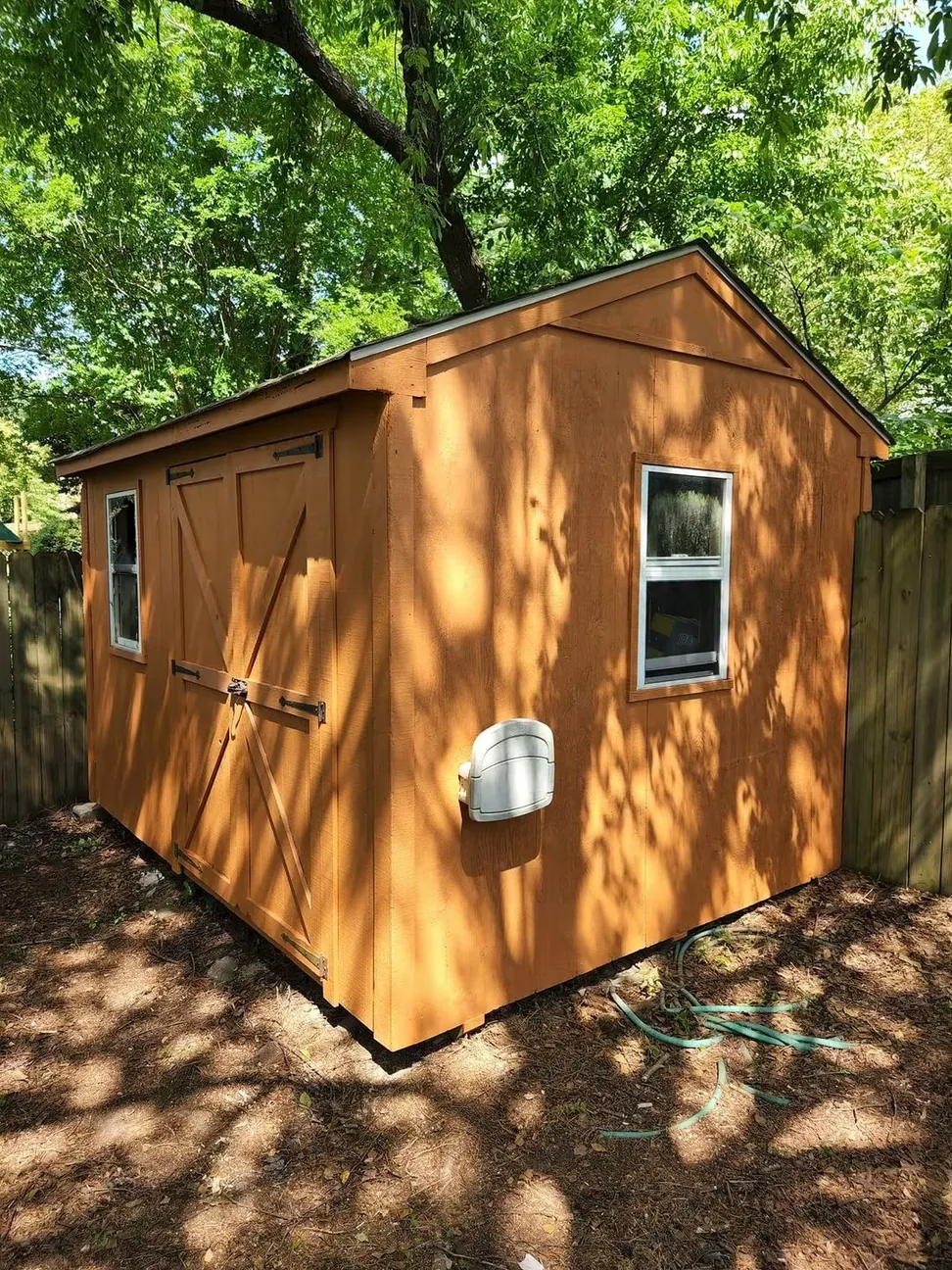
Backyard storage shed after staining, the weathered board-and-batten siding and barn doors finished in warm cedar
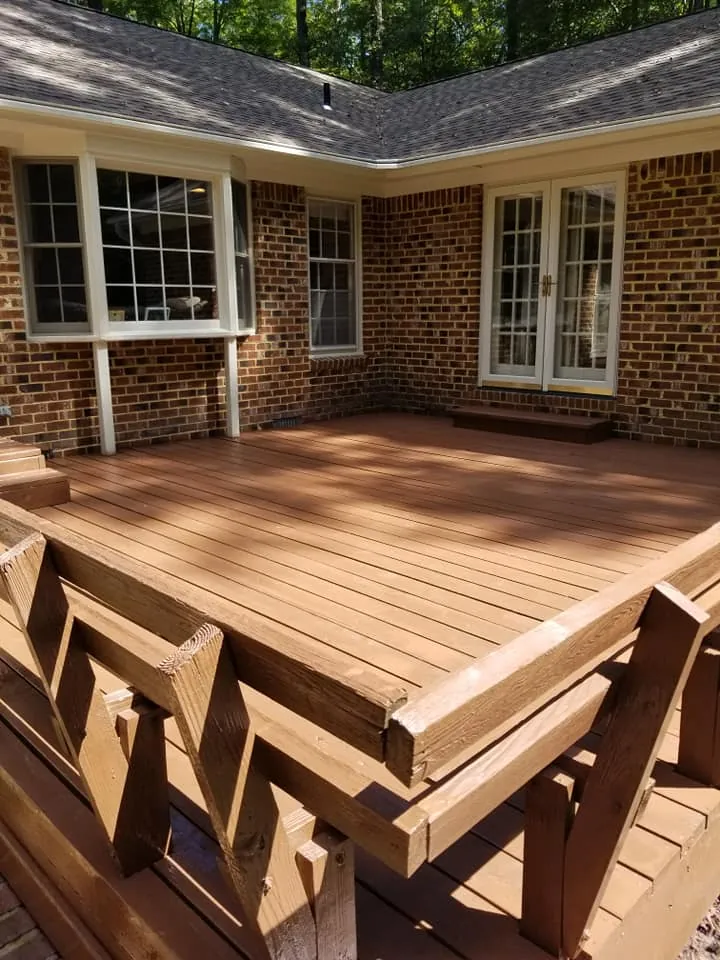
Backyard deck stained medium brown against brick house with French doors and bay window
Straight answer
What is still missing is a whole house from the street
Everything above is real exterior work on real Hampton Roads jobs. None of it is a full elevation, because none of the full elevations Two Koats has painted since 2018 were photographed at a resolution worth publishing. Every other painting site you look at today fills that space with stock photography of a house nobody who works there has ever been to. This page would rather be short. In the meantime, here is what actually decides whether an exterior lasts three years or ten.
Wash, then treat
Salt film and chalk come off with a proper wash. Mildew does not — it has to be treated and rinsed, or it grows back up through the new coat within a season.
Feather the edges
Failing paint comes off, sound paint stays, and the boundary between them gets sanded to a taper. Skip it and you can see where the scraper stopped from the street.
Then two full coats
Siding, trim, soffits, fascia, shutters and doors, with the first coat allowed to cure before the second goes over it.
Get an estimate from Nate
Pick a time that suits you and the slot is confirmed there and then, at eleven at night if that is when you are thinking about it. Nate comes out, looks at what is actually there, writes down what he would do, and gives you a number.