
Siding, trim, soffits and shutters
Exterior painting
On this coast the preparation is the job. The painting is the short part at the end.
An exterior paint job in Hampton Roads is fighting three things at once: salt aerosol off the water, humidity that sits high most of the year, and direct sun on south and west elevations that pushes surface temperatures well past what a coating is comfortable with.
None of those are solved by a better can of paint. They are solved by what happens to the surface before the paint arrives, and by not painting on the wrong day.
Drag it
Same wood. Stripped, treated, coated.
Siding this far gone is the argument for preparation in one picture. It was washed, the failed finish taken back and the bare wood feathered in before anything was applied. The boards, the doors, the hinges and the light are the ones that were already there.
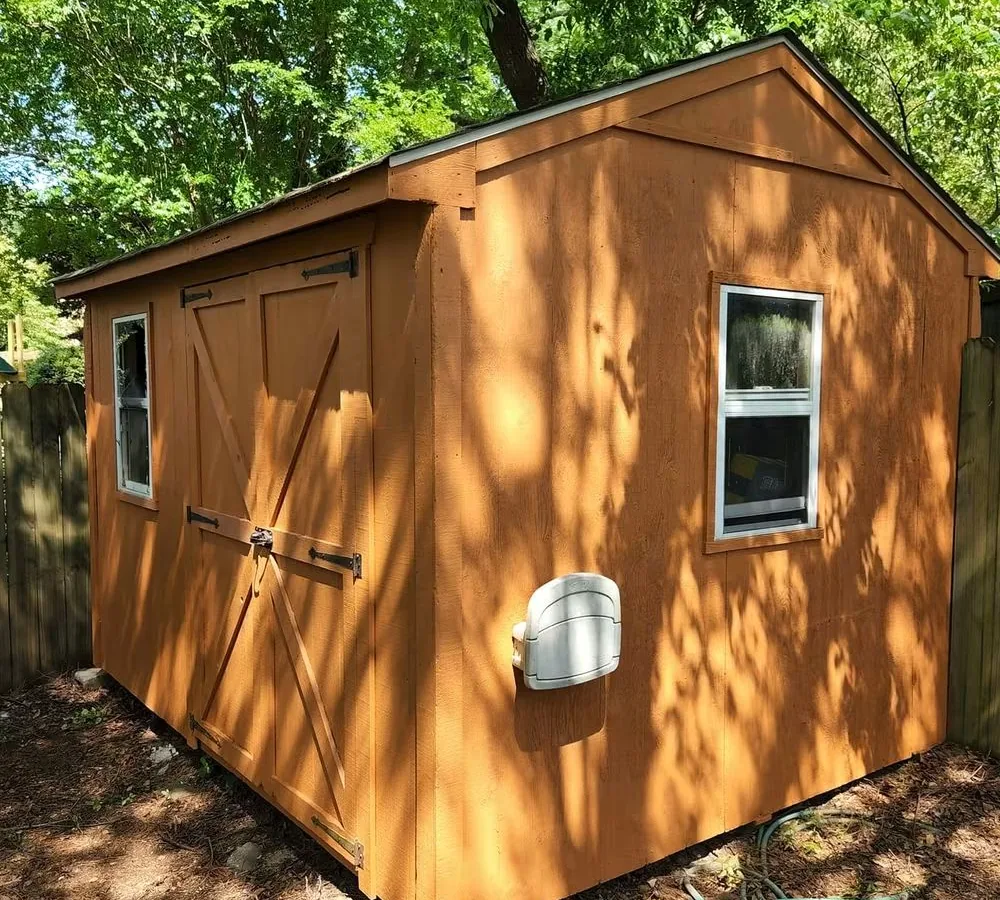
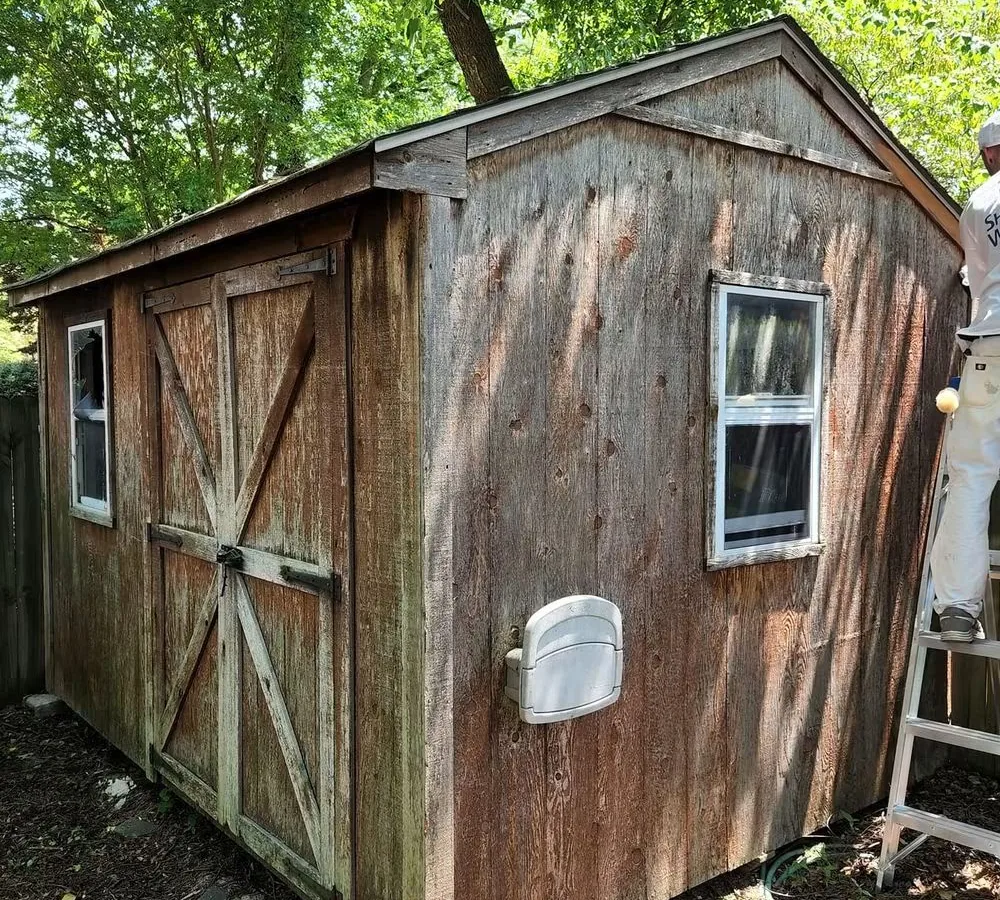 BeforeAfter
Step by step
How a exterior painting job runs
- 01
Wash, and treat what washing will not remove
Salt film, chalk and general grime come off with a proper wash. Mildew does not — it has to be treated and rinsed, or it grows back up through the new coat within a season. Then the house dries all the way through, which in high humidity takes longer than people expect.
- 02
Scrape and sand
Failing paint comes off. Sound paint stays. The edges between the two get feathered so the transition does not telegraph through as a visible ridge once the finish is on.
- 03
Repair, fill and caulk
Damaged wood gets addressed, holes filled, and every joint where two materials meet gets caulked. Old caulk that has gone hard and split gets cut out rather than painted over.
- 04
Spot-prime
Bare wood, filler, chalked surfaces and anything that bleeds gets primed. On cedar and redwood that means a primer that blocks tannin, or brown staining comes through the finish in the first year.
- 05
Two full coats
Siding, trim, soffits, fascia, shutters and doors — whichever of them your scope lists. Both coats on all of it, with the first one allowed to cure before the second goes over it. Two coats is the standard; if you have hired us for something narrower, your written scope says so.
- 06
Walk the property
All the way around, including the side nobody looks at. Anything you point at gets fixed before we leave.
Where an exterior actually fails
Almost never in the middle of a wall. It fails at the top edge of horizontal trim boards where water sits, at butt joints and cut ends where water gets behind the board, under soffits and overhangs where wind-driven rain reaches and sun never dries it out, and at sills.
Those are the places to spend time and they are the places a fast job skips, because none of them are visible from the driveway.
The right and wrong times of year here
Spring pollen in Hampton Roads is heavy enough from late March into May that a fresh coat can pick up a film before it sets. Deep summer brings wall temperatures that shorten open time and cause lap marks on a wall that was rolled correctly. Late autumn brings dew points that leave a surface damp well into the morning.
The good windows are May into June and September into early November. If your job wants to wait three weeks for a better window, we will say so. Painting on the wrong day to hit a calendar date is how a ten-year job becomes a four-year one.
Materials behave differently
Old cedar moves with humidity and bleeds tannin. Fiber cement chalks and needs its joints sealed. Stucco is porous, cracks along stress lines rather than peeling, and must be allowed to breathe. Aluminum soffits oxidize. Brick usually should not be painted at all, and if it is, it is a decision that cannot easily be undone.
- Cedar shake, shingle and clapboard
- Fiber cement and engineered trim
- Stucco crack repair and coating
- Vinyl-sided homes: trim, shutters, soffits and doors
- Porch floors, ceilings, columns and railings
“Nate and his crew did a great job! They are thorough and professional. I highly recommend them for any painting project you have.”
“5 thumbs up! Very impressed with the superior quality of work!”
Exterior Painting questions
Exterior Painting, answered
How long does exterior paint last in Hampton Roads?
It depends almost entirely on preparation and exposure. A properly prepared house holds for years; a rushed one can start flagging on the water-facing elevation within three. The side facing the weather always goes first.
Do you power wash before painting?
Always. But washing alone will not remove mildew, which has to be treated and rinsed, and it will not fix chalked paint, which needs priming. A wash is the first step, not the whole preparation.
Should I paint my brick house?
Usually not. Painted brick is difficult and expensive to reverse, and it changes how the wall handles moisture. It is worth a real conversation at the walkthrough rather than a quick yes.
What happens if it rains partway through?
Work stops and resumes when the surface is genuinely dry. Painting damp siding to stay on schedule is the most reliable way to guarantee the job fails early.
Ask Nate about exterior painting
Pick a time that suits you and the slot is confirmed there and then, at eleven at night if that is when you are thinking about it. Nate comes out, looks at what is actually there, writes down what he would do, and gives you a number.