
How the work is done
Nine steps, in this order
This is the page to read if you are holding three quotes and one of them is higher. It is where the difference goes.
- 01
Inspection, before anything is quoted
Nate walks the job himself and looks at surfaces, not square footage.
On an exterior that means running a hand across the siding to feel for chalk, checking the top edges of horizontal trim and the underside of soffits where water sits, looking at the sills, and finding out whether the shaded elevation has mildew or dirt. Those are different problems with different fixes.
On an interior it means looking for nail pops, cracked drywall seams, previous repairs that were never sanded flush, water stains that will bleed through, and any bold color that is being covered. It also means finding out what is actually under the current paint, because a glossy surface and a chalky one need different treatment.
The scope that comes out of this says what is included and what is not. If something is excluded, it says so in writing rather than being discovered later.
- 02
Protect the house
Before a tool comes out.
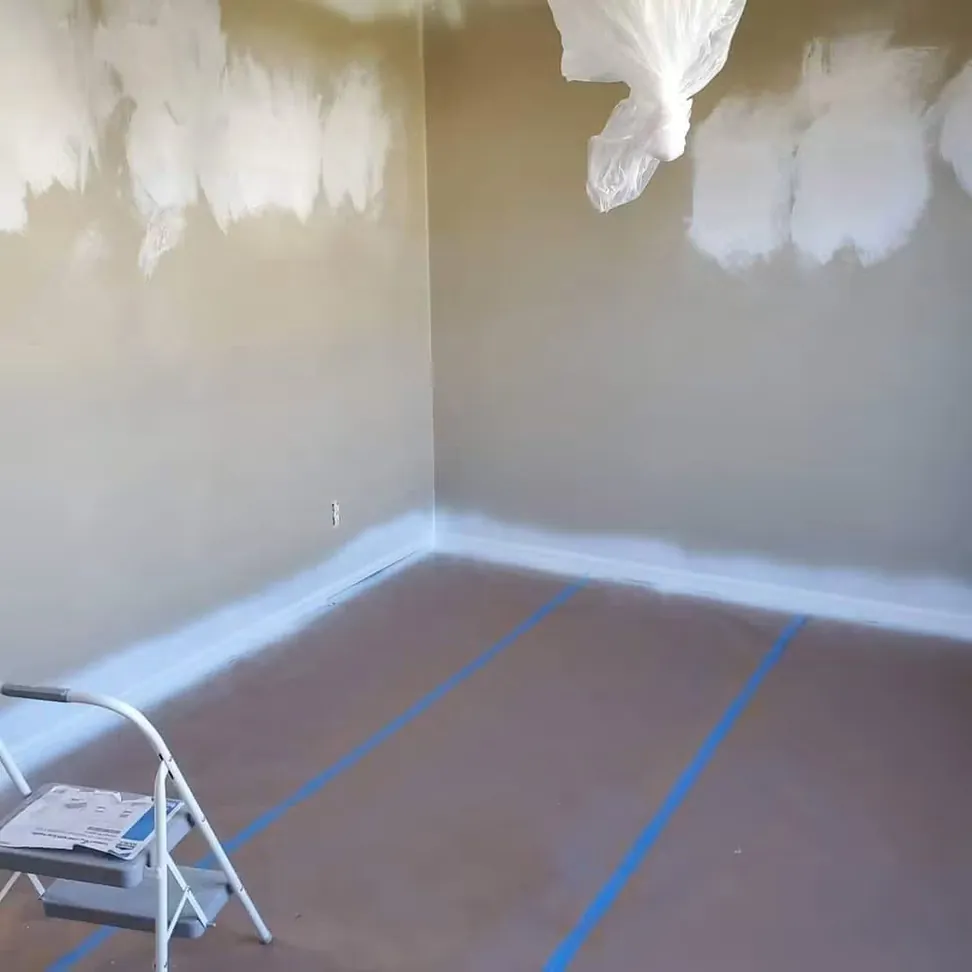
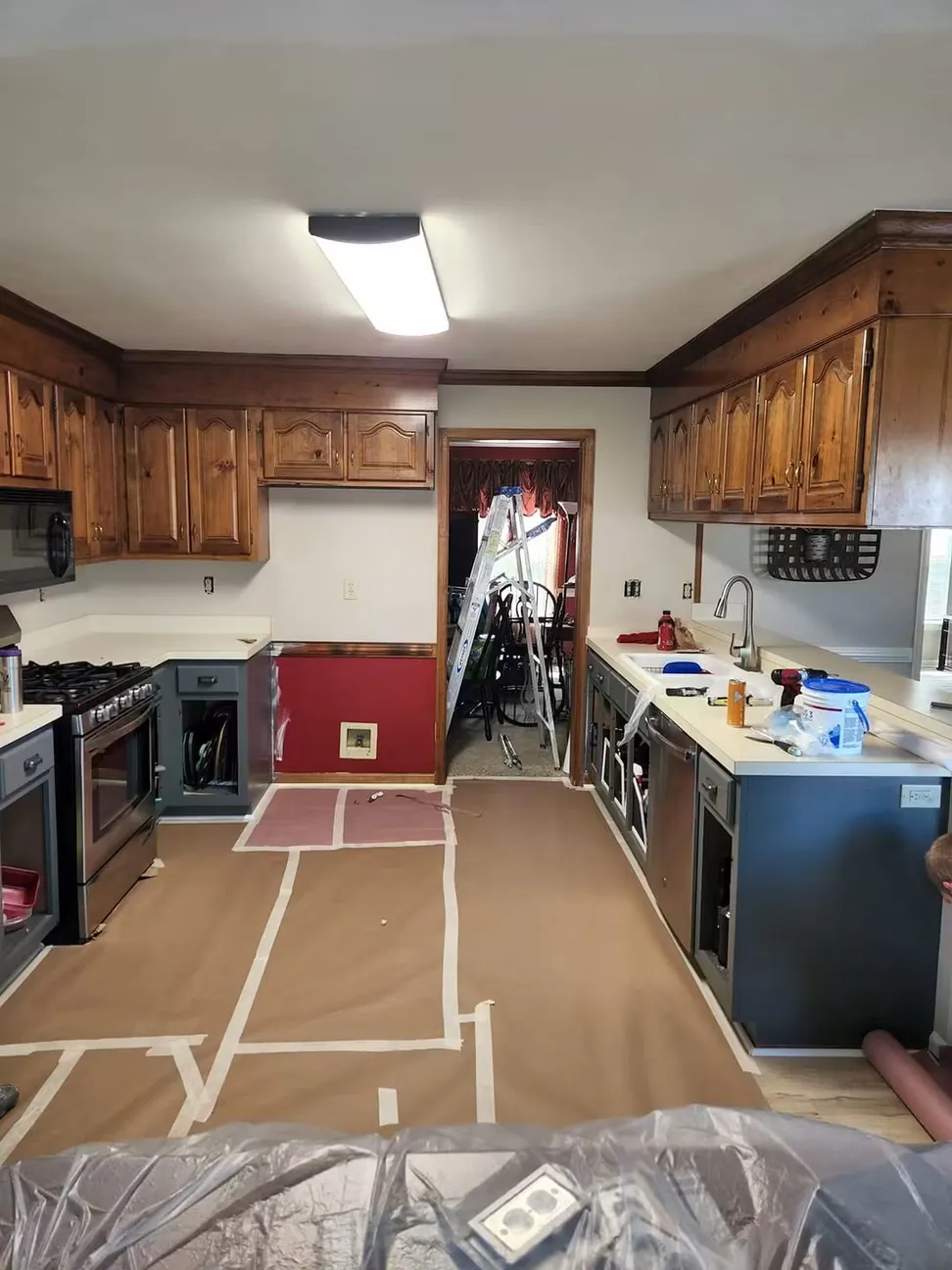
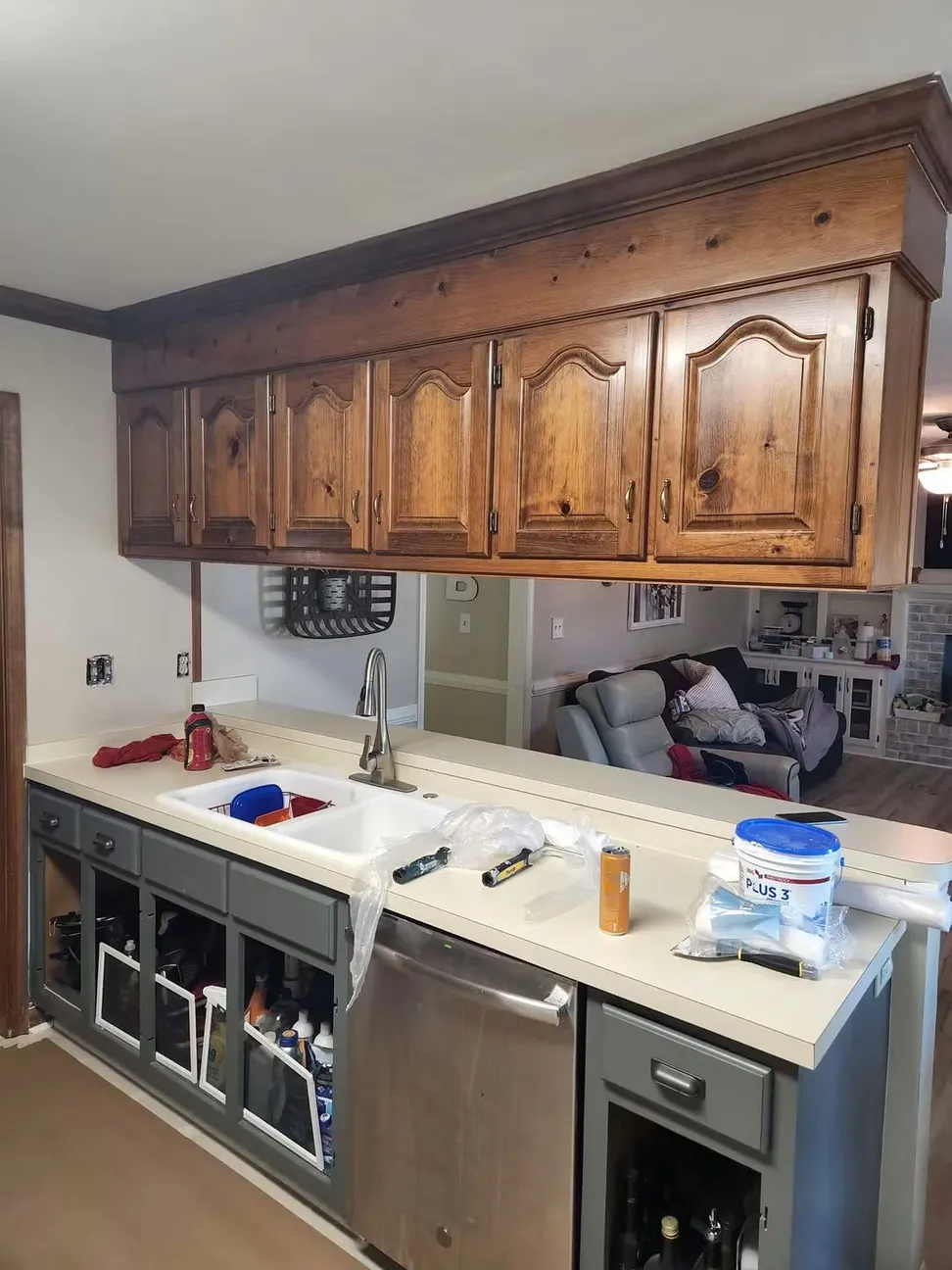
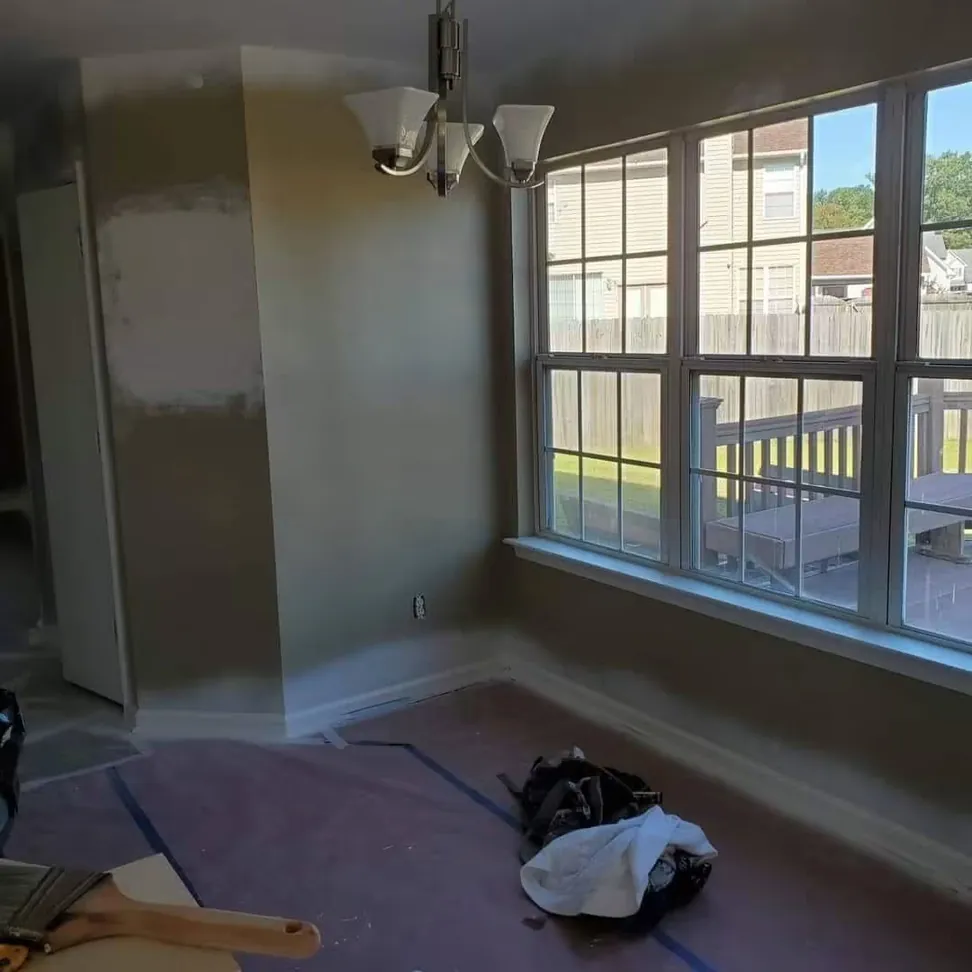
Inside: furniture to the middle of the room and covered, floors protected, switch plates and hardware removed rather than cut around, doors taken off where they need to be finished properly.
Outside: plants covered, walkways and driveways protected, and the neighbor’s property considered, which on a narrow lot is not a courtesy but a requirement.
- 03
Wash, and treat what washing will not remove
Exteriors only, and it is not the same as pressure washing.
Salt film, chalk and general grime come off with a proper wash. Mildew does not. Mildew has to be treated and rinsed, because pressure alone removes what you can see and leaves the rest, and it grows back up through the new coat within a season.
Then the house dries all the way through. In Hampton Roads humidity that takes longer than people expect, and it is the step most often cut to keep a job on schedule.
- 04
Scrape and sand
Failing paint comes off. Sound paint stays.
There is no benefit in stripping a surface that is bonded well, and no way to save one that is not. The judgment is where the line between the two falls, and it is made surface by surface rather than by a rule.
The important part is what happens at the boundary. Every scraped edge gets feathered so the step between old paint and bare substrate is sanded to a taper. Skip that and the ridge telegraphs straight through the finish, and you can see exactly where the scraper stopped from across the street.
Inside, sanding is about flattening previous brush ridges on trim and knocking the sheen off anything glossy so the new coat has something to key into.
- 05
Patch and repair
Filler is not a finish, and it is not where the corners get cut.
Nail pops get set and filled. Cracked drywall seams get taped properly rather than skimmed, because a skimmed seam reopens through fresh paint in the first season of the house moving. Old plaster cracks get opened out to a V and filled, for the same reason.
On exteriors, damaged wood gets addressed before it gets painted. Paint over rot is paint over rot, and it buys about one year.
Everything filled gets sanded flush. A patch you can feel with a hand is a patch you will see in raking light for the next ten years.
- 06
Caulk every joint
The step that decides how sharp the job looks and how long the wood lasts.
Inside, the joint where trim meets wall is what makes trim read as crisp or read as tired. It gets caulked and tooled so there is a clean shadow line rather than a gap.
Outside, every joint where two materials meet is a place water can get behind the wood: trim to siding, trim to brick, butt joints, the cut ends of boards. Old caulk that has gone hard and split gets cut out rather than painted over, because painting over split caulk hides it for exactly one season.
- 07
Prime what needs priming
Selectively, and for a reason each time.
Bare wood and fresh filler, because both are porous and will drink an uneven amount of finish. Chalked surfaces, because a finish coat over chalk is bonded to powder. Water stains, smoke and tannin-bleeding woods like cedar and redwood, because they need a blocking primer or they come through the finish, usually in the first year.
Bold colors being covered, and glossy surfaces that need adhesion. Priming selectively is not a shortcut. Priming nothing is.
- 08
Two full coats
Both of them, on everything the written scope lists.
Cut in by hand at the ceiling line, the trim and the corners, then the field is rolled or sprayed. Then all of it again.
Two coats is the standard and it is what a job is quoted against unless you have asked for something else. Where a customer has specifically hired us for a one-coat repaint or another limited scope, the written scope says so and the signed contract governs that job. The scope is the document that decides, which is why step one exists.
The first coat seals the surface and evens out whatever the primer left behind. The second coat is the finish you live with, and it goes down on something that is already uniform, so the color reads the same in the corner as in the middle and the sheen stays even under raking light.
The first coat is allowed to cure before the second goes over it. On a humid day that means waiting, because a second coat over an uncured first traps it.
- 09
Walk it with you, with a light
Room by room, or all the way around the house.
Including the elevation nobody looks at from the driveway. Anything you point at gets fixed before the crew loads the truck, not on a return visit that has to be scheduled.
Then the house gets put back: hardware refitted, switch plates on, furniture returned, and the site cleaned.
What this buys you
A finish that still looks like paint in year eight instead of a touch-up in year four. Trim that is still sharp at the shadow line. A wall that reads the same color in the corner as it does in the middle.
It is also the reason the quote is what it is. Two coats over real preparation takes longer and costs more to put on. That is the trade, and it is the one the company is built around. What your job gets is what your written scope says, and the warranty is written on the back of that.
“Two Koats was great! They took their time and were very neat. They gave me great suggestions on color schemes which turned out great. I would recommend them to everyone!”
“Nate and his team were fantastic! Consistently followed-up to ensure we were satisfied throughout the project. Team was always on time and took care as they worked in the house to complete the job. Very professional, excellent service, and a job very well done!”
Process
Comparing quotes
Why is preparation most of the cost of a paint job?
Because it is most of the labor. Washing, scraping, feathering, filling, sanding, caulking and priming an older exterior can take longer than applying both coats put together. Paint is a small part of what you are paying for; the hours spent on the surface underneath it are the rest.
How do I tell what a cheaper quote is leaving out?
Ask three questions. Is mildew being treated or only pressure washed? Is old, split caulk being cut out or painted over? And does the written scope say two full coats on the surfaces listed, or does it leave the number of coats to whoever is holding the roller? Those three account for most of the difference between quotes on the same house.
Do you ever skip priming?
On a sound, previously painted surface in good condition, yes, and that is the correct call. Priming is selective and there is a reason for it each time it happens: bare wood, filler, chalk, stains, tannin-bleeding woods, glossy surfaces and bold colors being covered.
What happens if the weather turns partway through an exterior?
Work stops and resumes when the surface is genuinely dry. Painting damp siding to stay on schedule is the most reliable way to guarantee the job fails early, and it is not worth the two days it saves.
Will you move my furniture?
Yes. Furniture goes to the middle of the room and gets covered, floors are protected, and hardware and switch plates come off rather than getting cut around.
Get an estimate from Nate
Pick a time that suits you and the slot is confirmed there and then, at eleven at night if that is when you are thinking about it. Nate comes out, looks at what is actually there, writes down what he would do, and gives you a number.